

Food Stuck Between Your Teeth? Understanding Dental Food Impaction
Does food keep getting stuck between your teeth every time you eat? While occasional food getting stuck in your teeth is common, food that repeatedly gets trapped in the same spot may be a sign of an underlying dental problem. Left untreated, food impaction can lead to discomfort, persistent bad breath, gum inflammation, tooth decay, and even more serious dental problems over time.
Understanding why food gets trapped between your teeth and knowing when to seek professional care can help protect your smile and prevent small issues from becoming bigger ones. In this blog, we’ll explore the common causes of dental food impaction, the risks it poses, and the treatment options available to keep your teeth and gums healthy.
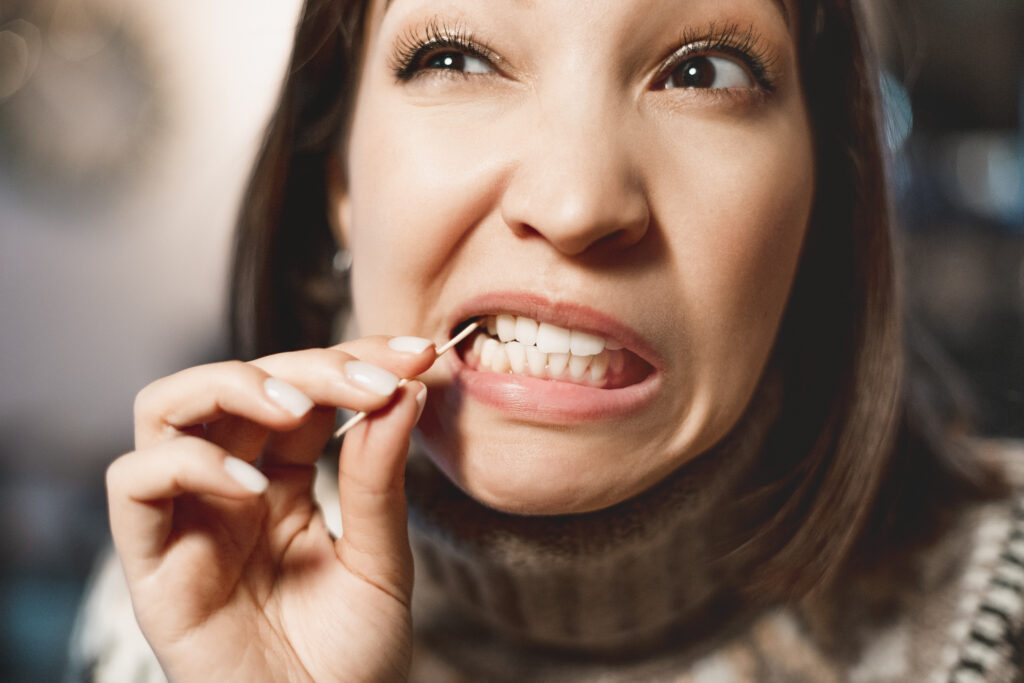
Why Does Food Keep Getting Stuck Between My Teeth?
Dental food impaction occurs when food becomes lodged between your teeth or beneath the gumline. While occasional food trapping is normal, persistent food impaction in the same area is often a sign of an underlying dental issue.
The main cause of food impaction is extra space between teeth, also known as a “food trap.”
Common Causes of Food Traps
Gaps Between Teeth
Natural spacing or spaces that develop over time between teeth can allow food particles to become trapped during eating.
Worn or Chipped Teeth
Damaged tooth surfaces can create uneven areas that catch food.
Dental Procedures
Extractions or wisdom tooth removal may leave gum flaps that catch debris as they heal.
Poorly Fitted Fillings or Crowns
If a filling or crown doesn’t create a snug contact with adjacent teeth, food may become trapped in the space.
Risks of Food Traps on Your Oral Health
If you’re dealing with more than the occasional popcorn kernel, persistent food traps can lead to several oral health problems:
Cavities
Trapped food feeds bacteria, increasing the risk of tooth decay and enamel erosion.
Gum Disease
Food left under the gumline can cause irritation, inflammation, and eventually gum disease.
Pain and Sensitivity
Trapped food can create pressure and irritation, leading to tenderness or pain in the gums.
Bad Breath
Decomposing food particles promote the growth of odor-causing bacteria, resulting in persistent bad breath.
Treatment Options for Dental Food Impaction
Dental food traps, also known as food impaction, can increase your risk of cavities, gum disease, bad breath, and tooth sensitivity if left untreated. Fortunately, treating food impaction is simple. A variety of dental treatments can eliminate food traps by addressing their underlying causes, helping to restore your oral health and prevent future complications. After evaluation, your Smiley Pearls dentist may recommend one of the following treatments:
Proper Oral Care
Mild food traps may not require immediate treatment if you can clean them effectively yourself. Your dentist can give you helpful tips and show you which areas of your mouth may need more attention.
Dental Filling or Crown
A filling or crown can be used to close the gap between teeth, creating a tighter contact point that still allows floss to pass through but helps keep food out of the trap.
A food trap between your teeth can be uncomfortable and frustrating, but it’s important to remove trapped food carefully to avoid damaging your teeth or gums. Using gentle, dentist-recommended techniques can help dislodge debris, reduce irritation, and prevent plaque buildup while protecting your oral health. If food frequently becomes trapped in the same area, it may be a sign of an underlying dental issue that should be evaluated by your dentist.
8 Helpful Tips to Safely Remove Food Stuck Between Teeth
- Brush gently around the affected area using a soft-bristled toothbrush to loosen trapped food and remove plaque.
- Floss carefully by sliding the floss gently between your teeth and curving it around each tooth rather than snapping it into your gums.
- Use an interdental brush if recommended by your dentist. These small brushes can help clean larger spaces between teeth.
- Rinse with warm salt water to help flush away debris while soothing irritated gum tissue.
- Try a water flosser to gently remove food particles from hard-to-reach areas without excessive pressure.
- Stay hydrated to encourage healthy saliva production, which naturally helps wash away food particles and bacteria.
- Avoid using sharp objects such as toothpicks, pins, or fingernails, as they can injure your gums or damage dental work.
- Schedule a dental appointment if the same area repeatedly traps food, as this may indicate a cavity, damaged filling, shifting teeth, gum disease, or another condition requiring professional treatment.
FAQs About Food Stuck Between Teeth
Why does food keep getting stuck in the same tooth?
Food repeatedly getting trapped in one location often means there’s an underlying issue, such as a cavity, worn filling, spacing between teeth, or gum recession. Your dentist can determine the cause and recommend treatment.
Does food getting stuck between teeth mean I have a cavity?
Not always. While a cavity can create a food trap, food impaction may also result from shifting teeth, worn dental work, gum recession, or natural spacing.
Can food trapped between teeth cause gum disease?
Yes. Food particles feed bacteria that produce plaque. Over time, this can irritate the gums and increase the risk of gingivitis and periodontal disease.
Should I use a toothpick to remove food from my teeth?
Avoid sharp wooden or metal objects because they can injure your gums or damage dental work. Floss, interdental brushes, or a water flosser are safer choices.
When to Talk to Your Dentist
If food impaction is a regular concern, your dental team at Smiley Pearls is here to help. Identifying the cause early can help prevent more extensive dental problems and keep your smile healthy. If you’re experiencing frequent food traps, schedule an appointment with the team at Smiley Pearls for a comprehensive evaluation and personalized treatment recommendations.